PAL MCP Server (pal-mcp-server): Multi-model orchestration for Claude Code, Codex CLI, Gemini CLI
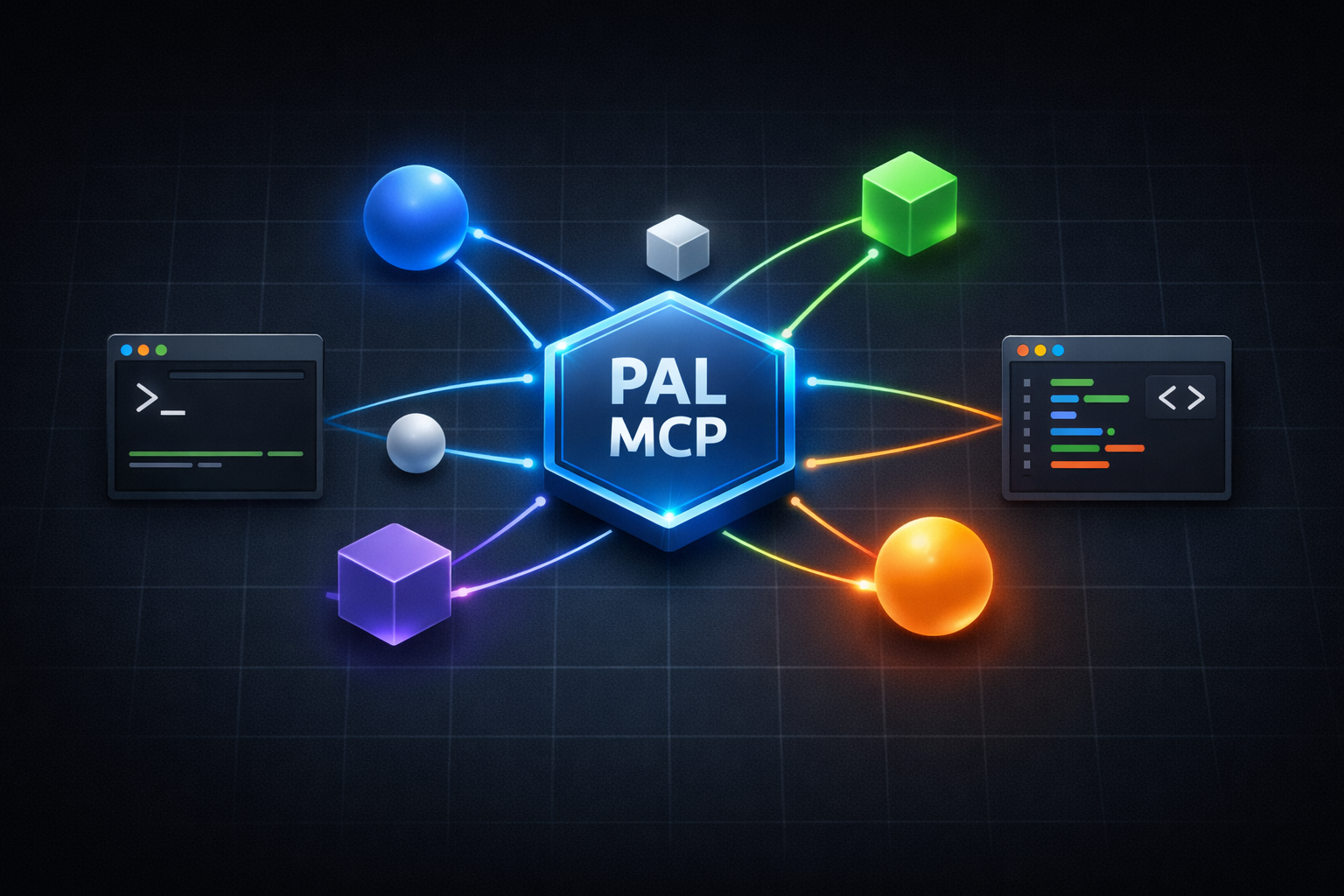
If you’re already using Claude Code, Codex CLI, Gemini CLI, or an IDE client like Cursor, you’ve probably hit the same wall: you want the right model for the task (fast for iteration, strong for reasoning, different strengths for review vs implementation), but you don’t want to constantly re-explain context.
PAL MCP Server (often referenced by its earlier name Zen MCP) is an open-source Model Context Protocol (MCP) server designed to solve exactly that. It sits between your client and multiple model providers, making “multi-model” feel like a single, coherent workflow.
What it is (in one sentence)
PAL MCP is an MCP server that lets your primary AI client orchestrate multiple models and providers, and even bridge other AI CLIs, so you can route work to specialists without breaking context or switching tools.
Who it’s for
PAL MCP is a strong fit if you:
- switch between terminal agents (Claude Code / Codex CLI / Gemini CLI) and an IDE agent (Cursor)
- want provider flexibility (OpenAI, Anthropic, Google, local models via Ollama, aggregators, etc.)
- prefer repeatable patterns like “plan with one model, implement with another, review with a third”
This is not about replacing your workflow—it’s about making it more modular.
Standout features (curated)
1) Multi-model routing without leaving your main tool
PAL MCP’s core promise is simple: keep your main client in control, while selectively delegating tasks to different models. Instead of restarting conversations or copy-pasting prompts, you route work through a single MCP layer.
Practical use:
Use a fast model for quick refactors, a deeper reasoning model for architecture decisions, and a different model for security or performance review.
2) Configuration-first, infrastructure-friendly setup
PAL MCP is configured via environment variables and standard config files. That may sound unexciting, but it matters: it means the server can be run locally, scripted, or shared across a team without bespoke UI tooling.
If you think of MCP servers as infrastructure, PAL MCP behaves like one.
3) Role-based and isolated workflows
Community usage and documentation around PAL MCP (and its earlier Zen MCP name) emphasize patterns such as:
- role-based agents (planner, reviewer, implementer)
- isolated investigations that don’t pollute the main thread
- consensus-style comparisons across models
The value isn’t just “more models”—it’s cleaner thinking and clearer handoffs.
4) Real ecosystem traction
PAL MCP appears across MCP directories and discovery platforms, which usually signals something important: people are actually experimenting with it in real workflows, not just starring a repo.
It’s also listed on Cursor.Store, reflecting growing interest from IDE-centric developers.
Practical workflows
Plan → Implement → Review
A common PAL MCP workflow looks like this:
- Planner model decides approach, edge cases, and structure
- Implementation model writes code and tests
- Review model checks security, performance, and maintainability
All three steps happen inside one orchestrated workflow, instead of three disconnected chats.
Compare outputs across tools
If you primarily use one CLI but want to sanity-check outputs from another, PAL MCP makes side-by-side comparison easier without re-prompting from scratch.
Large codebase onboarding
Delegate broad repository scanning and summarisation to one model, then keep your main context focused on decisions and edits—avoiding context window overload.
Security considerations
Because PAL MCP sits between your clients and multiple providers, treat it like an internal service:
- use least-privilege API keys
- store secrets in environment variables or a vault
- keep an eye on releases and updates
This applies to any orchestration layer, not just PAL MCP.
Where to learn more
- GitHub repository (canonical documentation and setup)
- Configuration and environment variable guides
- MCP directories and listings for quick install snippets
- Community discussions referencing PAL MCP / Zen MCP usage patterns
If you’re new to MCP in general, it’s worth reading a short MCP primer first to understand why servers like PAL MCP exist at all.
Why PAL MCP matters
PAL MCP is interesting not because it adds another tool, but because it points to where MCP is heading next: coordinating models, not just calling them.
If you’re already living in Cursor or a CLI-first workflow, PAL MCP is one of the clearest examples of multi-model orchestration done in a way that respects how developers actually work.